Library sale scouting: the field plan
Friends of the Library sales are still the best cost-per-book sourcing in the country: donated stock, volunteer pricing, and a schedule published weeks in advance.
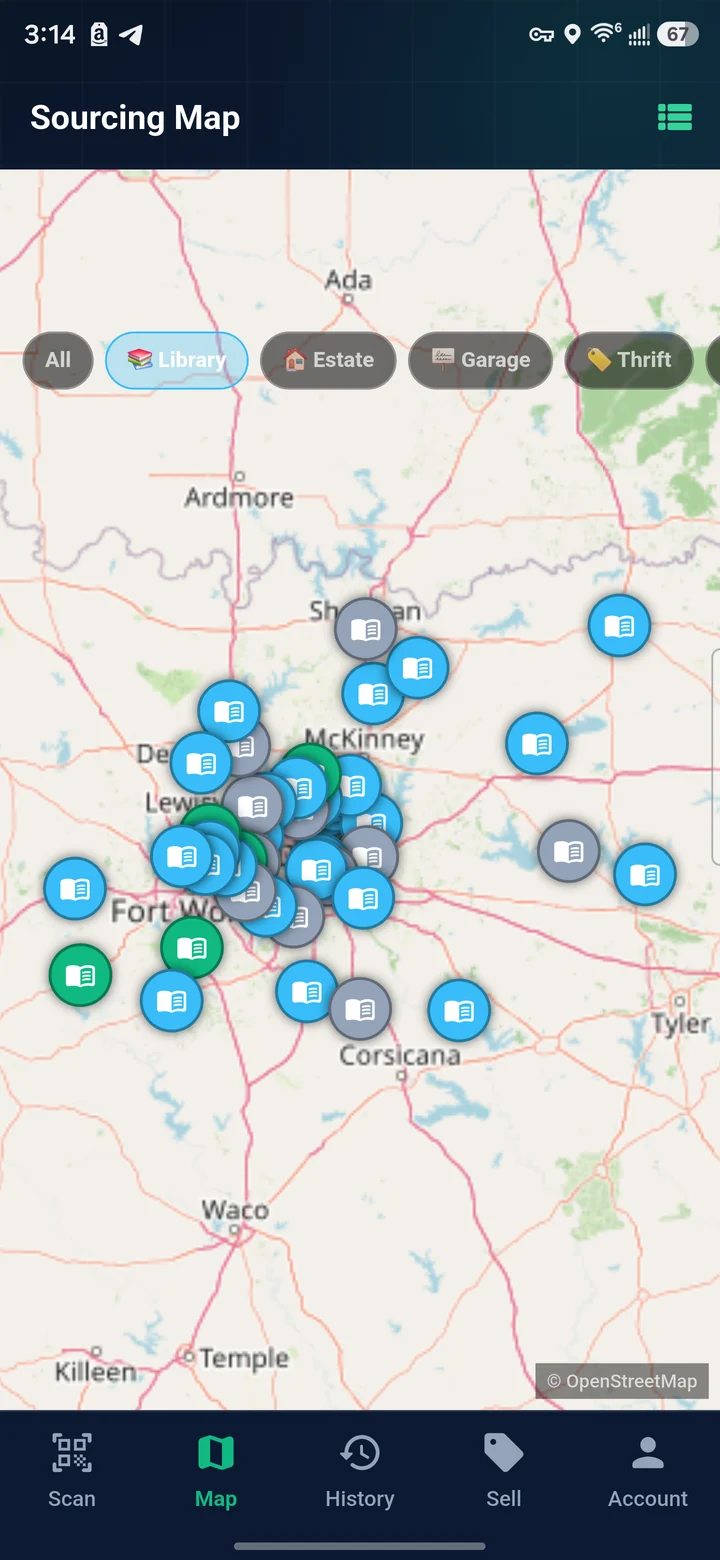
They're also the most structured venue a scout works: the same sale pays very differently depending on which day you walk in and what you did the night before. Here's the plan.
Know which sale you're walking into
Most FOL sales run a four-act structure, and each act has its own economics.
- Preview night. Members only, usually the evening before the public opening. Membership is often sold at the door for a few dollars; pay it. This is the deepest selection the sale will ever have, and every serious scout in the county knows it. Expect a line before the doors open and fast hands after.
- Open days. Full price on day one; many sales cut prices, often by half, on the later days. Selection thins as the days go, but competition usually thins faster.
- Bag day. The final act: fill a bag for a flat price. The unit of decision changes completely; the math is below.
- The ongoing store. Many Friends groups also run a year-round shop or a lobby cart, restocked weekly from the same donation stream. No lines, no elbows, steady yield. Underrated.
The night before
Three things, in order.
- Set the route. Sales cluster on weekends; the ones worth driving to get decided the night before, not in the car. Sale Finder pulls library sale calendars from public listings, alongside estate, garage-permit, surplus and thrift sources, five categories in all, with dates, doors-open hours, bag days and distance, and sets a calendar reminder the day before. There's a live preview of what's near you on that page. Plan my day orders the stops so the gas goes where the books are.
- Read the rules, and mean it. Some Friends groups ban scanners outright; some ban them on preview night only; most allow them everywhere. If the listing says no scanners, that includes the phone in your hand. Don't work around it: shop those sales on knowledge, verify in the car, or skip them. A scout scanning against the rules is how a scanner-friendly sale becomes a banned one for everybody. Know which kind you're driving to before you drive.
- Assume the basement. Sale rooms sit below grade more often than not, and signal dies at the stairs. RakeScan queues scans on-device and resolves them the moment you're back in range, so a dead room doesn't stop the count. How that works is its own guide: offline scanning in dead zones.
Table priority when the doors open
On preview night and the first morning you will not scan everything. Walk the room once, then commit in this order:
- Specialty nonfiction first. Medical, nursing, engineering, law, trades. This is where used ladders run deep and the gap between a shelf price and the low offer is widest. It's also the first table other scouts clear.
- Textbooks, with your eyes open. Recent editions can carry real ladders; they can also be gated for your account, and a gated BUY is dead inventory you paid for. RakeScan flags gating at the shelf, not at check-in; the background is in Amazon gating for book scouts.
- General nonfiction next. History, reference, cooking, crafts, regional titles. Slower tables, fewer elbows, honest hit rate.
- The fiction wall last, if at all. Mass-market paperbacks are where the penny race lives: dozens of sellers underbidding each other toward the floor. The ladder tells you in a glance; believe it.
Expect to put most of what you touch back. That's not failure; that's the verdict doing its job.
Bag-day math, honestly
On bag day the question flips from is this book a BUY to does this bag clear the bar. A bag is typically a five- or ten-dollar bet holding a dozen or two books, depending on size. That does two things to your math:
- One solid BUY usually carries the bag. A single title with a real ladder, even a modest one, covers the flat price, and everything else in the bag rides free.
- The rejects stop being zeros. RakeScan checks every REJECT against BookToCash and shows a cash offer when there is one: a dollar or two on ordinary titles, more on the right ones, free shipping on the whole cart. On bag day that turns filler into freight-paid cash instead of a donation pile.
Because the per-book floor is near zero, bag day rewards raw scanning speed. At a 1.3-second median verdict (measured), the app isn't the bottleneck; your hands are. A Bluetooth scanner in wedge mode keeps your eyes on the table. And weigh the haul honestly: what a heavy bag actually nets depends on how you fulfill, which is the subject of FBA vs MF for used books.
Work the ongoing store between sales
The year-round Friends store is the quiet edge: the same donation stream, restocked weekly, no crowd. It's also the right room for Shelf Scan: photograph a shelf, get a pull list of spines worth a closer look, then barcode-verify the flags. The photo is triage; the barcode verdict stays final.
If you want to feel the verdict before the weekend, run one ISBN through the engine on the homepage. Same rules, sample index.
Get RakeScan.
Free to scan on Android and iPhone; Pro for the power tools.


No ads, no card to scan. Sell your rejects to BookToCash with or without a plan.