Amazon gating, from the scout's side of the shelf
The book is real, the demand is real, the ladder is real, and none of it matters if Amazon won't let your account list the title.
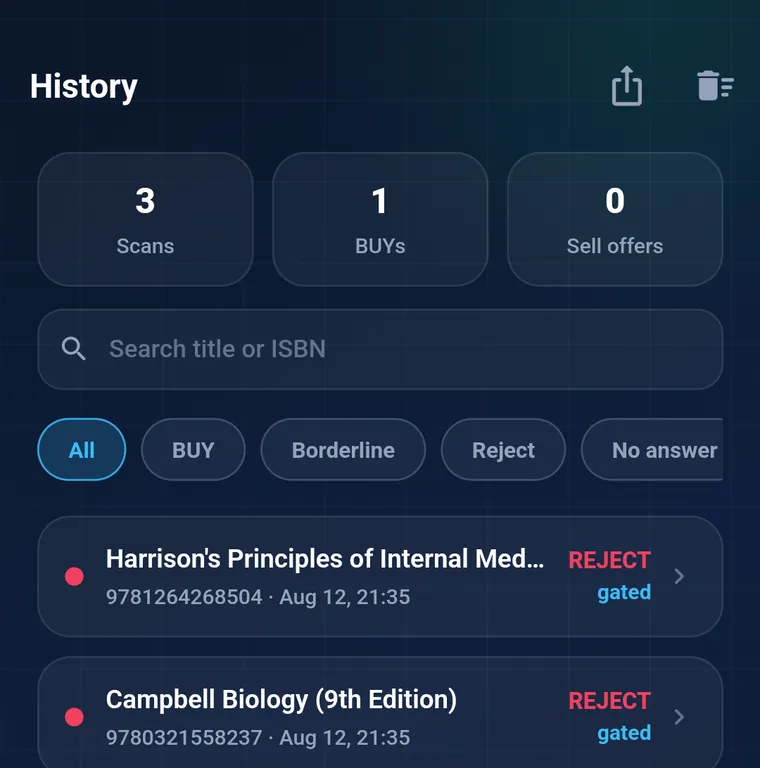
Every scout learns this lesson eventually. The only question is where: at the shelf, where it costs nothing, or at FBA check-in, where it costs the whole buy. This guide covers what gating actually is, why it differs from account to account, why check-in is the worst possible classroom, and why a gated book is still not a zero.
What gating actually is
Gating (Amazon calls it a listing restriction) is an approval requirement between your seller account and a product. It can sit at the category level, at the brand or publisher level, or on a single title (a single ASIN, Amazon's catalog ID). The listing exists. Other sellers are on it. You just can't join them until Amazon approves you, and for used books, approval is often not on offer at any price. In Seller Central it shows up as the flat approval-needed notice every bookseller learns to dread.
Note what gating is not: it's not about condition, not about your pricing, not about the market. A gate is a permission, and permissions belong to accounts.
Why another scout can sell it and you can't
Amazon does not publish the ruleset. In practice, gate decisions seem to track account age, sales history, performance metrics, and sometimes invoices from approved distributors: paperwork a used-book scout usually can't produce. Gates also open and close over time. A title you couldn't touch last year may be open today, and the reverse.
The consequence is uncomfortable but worth saying plainly: there is no definitive list of gated books. Two scouts at the same table can scan the same ISBN and face different walls. Anything claiming to be a complete, permanent gated list is selling you last season's weather. The honest version is a flag and a probability, and the final word is always a listing check on your own account.
The most expensive place to find out
Here is the timeline nobody wants:
- You pull a stack of big-name textbooks at a Friday sale. The ladders look strong.
- You prep the box and ship it to an FBA warehouse: Fulfillment by Amazon, where Amazon stores and ships your inventory. (If the FBA/MF split is fuzzy, read FBA vs MF for used books first.)
- At check-in you go to create the offer, and hit the approval screen.
Now you own dead inventory: books sitting in a warehouse you cannot sell from. Every exit costs something. A removal order ships them back at a fee per unit. Storage accrues while you decide. Another channel usually means less than the ladder you bought against. However you cut it, the margin you scanned for is gone, and you paid Amazon for the privilege of learning a permission fact you could have known for free.
The shelf is where this lesson is cheap
Learning about a gate at the shelf turns a disaster into a data point. The book goes back. You keep your money, your box space, and your prep time. Nothing about your day changes except one book you didn't buy.
What the flag buys you is the check before the money leaves your pocket.
Reading gate signals in the ladder
Gates leave fingerprints in the data you already read. A gate-prone title often shows a thin, high ladder: a handful of used offers, prices holding firm, no crowd racing to the bottom, because the crowd can't get in. It's the mirror image of a penny race, where an open door and a mob of sellers grind a book down to nothing. A thin ladder is not proof of a gate; sometimes a book is simply scarce. But when a title looks unusually calm and profitable, ask why the water is so still.
A gated reject still has a price
A gate blocks your Amazon listing, not the book's value. The demand that built the ladder didn't vanish. And the categories that gate hardest, medical, nursing, the heavyweight textbooks that pile up at library sales, are often exactly what buyback programs pay for.
RakeScan checks every REJECT, gated ones included, against BookToCash: 100,000+ books bought from people since 2019. When there's an offer, it sits on the screen next to the verdict: a cash price, free shipping, one box for the whole cart. A gated textbook that would have been dead inventory at FBA becomes a book you picked up for a dollar or two and shipped to a buyer who wanted it, no approval screen involved. It's the best kind of no.
Working gated titles, day to day
- Map your own gates. Before a haul weekend (Sale Finder will put the weekend's sales on one map), test-list a few titles you expect to see. Your account's answers are the only ones that matter.
- Keep a burn list. Publishers and categories that gated on you once will likely do it again. Write them down.
- Decide the fallback before you buy. If a title gates on you, is the plan MF from your closet, another channel, or the buyback line? A gate hurts most when the books are already stranded in a warehouse.
- Let the flag do the checking. A gate warning at verdict time costs one shelf return. The same fact at check-in costs the buy.
You can see how a verdict carries all of this: run one ISBN through the demo and read the trace.
Get RakeScan.
Free to scan on Android and iPhone; Pro for the power tools.


No ads, no card to scan. Sell your rejects to BookToCash with or without a plan.