Penny Race 101
A spotless hardcover with dozens of sellers behind it, the cheapest asking one cent: the book looks like money, the listing says otherwise.
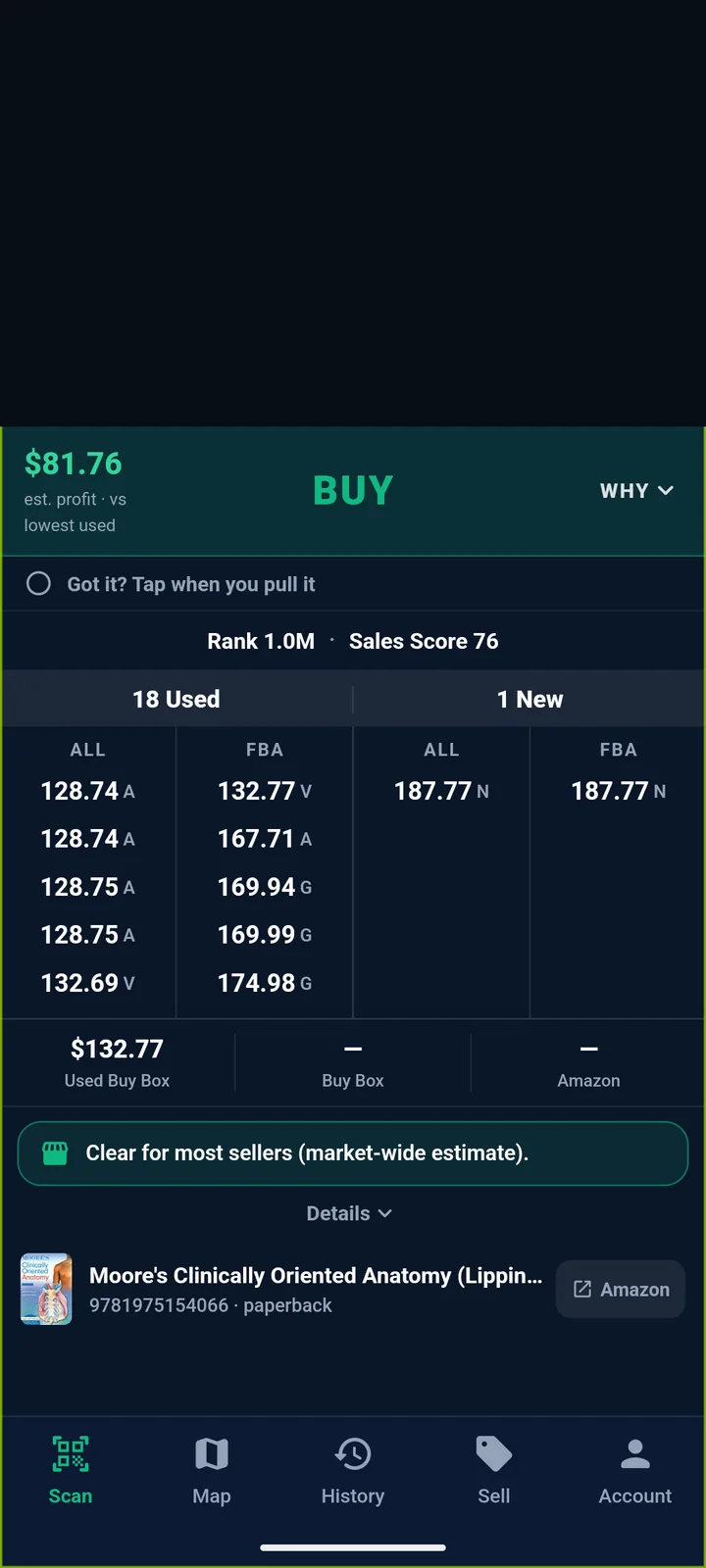
Telling the two apart from the shelf, in seconds, is one of the highest-leverage skills in scouting. This guide covers what a penny race is, why the fee math is uglier than the price suggests, how to recognize one before the book goes in your bag, and the specific cases where you buy the book anyway.
What a penny race is
A penny race is what happens when the supply of a used book permanently outruns its demand. Dozens, sometimes hundreds, of sellers hold copies. Price is the only lever any of them has, so the bottom of the offer ladder gets undercut a cent at a time until it hits the floor: one penny, plus shipping. Fresh copies keep arriving from every donation bin and estate cleanout in the country, so the race never ends; it just absorbs new entrants.
It happens to good books. Former bestsellers, book-club staples, last decade's airport thrillers: anything printed in the millions eventually has more surviving copies than remaining buyers. Demand can stay perfectly healthy the whole time. A penny race is not a demand problem; it is a supply problem, and supply is the one thing a clean cover tells you nothing about.
The fee math is worse than the price
The penny is not the real number; the shipping credit is. On a merchant-fulfilled (MF) media sale, the buyer pays a fixed shipping charge and Amazon passes it to the seller. That credit is what penny sellers actually live on. Set against it: real postage, a flat media closing fee, a referral percentage taken on the whole transaction, a mailer, and your time. The credit often just about covers Media Mail postage; the closing fee takes most of what's left. The sellers who survive at one cent are volume operations with negotiated shipping rates and warehouse workflows.
A scout paying retail postage on single books is not in that business and should not want to be. Run the honest ledger on a book from the race region of the ladder and the net typically lands somewhere between a dollar or two and an outright loss, before you count listing it, storing it, and packing it.
Read the whole ladder, not one number
A single "used from" price hides all of this. The ladder, every live offer in order, is where the story is. Four things to read:
- The MF/FBA split. MF sellers ship the book themselves; FBA sellers store stock in Amazon's warehouses and get Prime placement. They are two different populations with two different cost structures, and a race among MF sellers does not automatically reach the FBA rungs. Whether that gap survives the fees is its own subject; the FBA vs MF guide walks the math.
- Condition letters. A bottom built of Acceptable and Good copies reads differently from Very Good copies at the same rung. When every condition is packed into the same few cents, condition has stopped mattering. That is the race talking.
- The anchors. An anchor is a price a sale actually clears at, not the lowest ask: the Used Buy Box (the used offer Amazon features), plus the Buy Box and Amazon's own offer when they exist. Profit is estimated from an anchor; the penny at the bottom is noise below it.
- Depth. Count sellers per rung. A handful of offers spread over real dollars is a market. Thirty offers packed inside a dime is a queue, and you would be joining the back of it.
Recognizing one from the aisle
The signs, in the order you'll see them:
- A deep used count. The seller count alone is a supply reading. Big number, be suspicious.
- A packed bottom. The first several rungs sit within cents of each other. Spread is health; compression is a race.
- No daylight under the anchor. When the Used Buy Box sits barely above the bottom rung, there is nowhere to stand between "featured" and "worthless".
- A tempting rank. Sales rank measures how recently and how often a book sells: demand, not margin. A penny-race title can carry a rank in the low six figures and sell constantly while paying nobody. Rank opens the question; the ladder answers it.
Condition predicts none of this. The spotless hardcover can be a penny race while the ex-library copy beside it pays for the whole trip. And races cluster wherever print runs cluster: the common tables at a big library sale are full of them, which is why the odd shelves out-earn the obvious ones. More on that in the library sale guide.
When you buy it anyway
A penny race earns a REJECT as a merchant-fulfilled flip. That is not always the end of the book:
- The FBA rungs hold. Sometimes the MF side races to a penny while FBA used offers sit meaningfully higher, with thin depth behind them. If you run an FBA pipeline and the spread survives the fee math, the call flips; the FBA vs MF guide covers when that spread is real.
- A true condition outlier. A genuinely like-new copy in a ladder of beaten ones can sometimes price above the race. Modestly. Believe it only when the upper-condition rungs show actual daylight.
- The reject still pays. RakeScan checks every REJECT against BookToCash, which has bought 100,000+ books from people since 2019, and when there is an offer, shows a cash price on the spot with a free shipping label. The book skips the race entirely and sells once, to a buyer you already know.
That last path is what changes shelf behavior. A penny race stops being a shrug and becomes a fast, small yes or a clean no; either way, you keep moving.
Skeptical? Run one book through the single-ISBN demo first.
Get RakeScan.
Free to scan on Android and iPhone; Pro for the power tools.


No ads, no card to scan. Sell your rejects to BookToCash with or without a plan.